📚🌼 3 Flower-Themed Watercolor Books for Beginners

If you love painting flowers but aren’t sure which watercolor book will actually help you improve, it can feel like guesswork. This guide shares three beginner-friendly flower-themed watercolor book recommendations — and how to choose the one that fits your painting style.
Why These 3 Watercolor Books Focused on Painting Flowers?
If you’re drawn to painting flowers and want beginner-friendly guidance that translates into your own practice, these are three watercolor books I personally recommend as a self-taught artist and educator.
Each one offers a slightly different approach — from step-by-step instruction to creative exploration and progressively more detailed floral projects — so you can find a style that fits your way of learning and painting.
💡 Tip: Be sure to save this post so you can come back to these book picks when you're thinking "flowers" for your next watercolor project.
The Top 3 Flower-Themed Picks
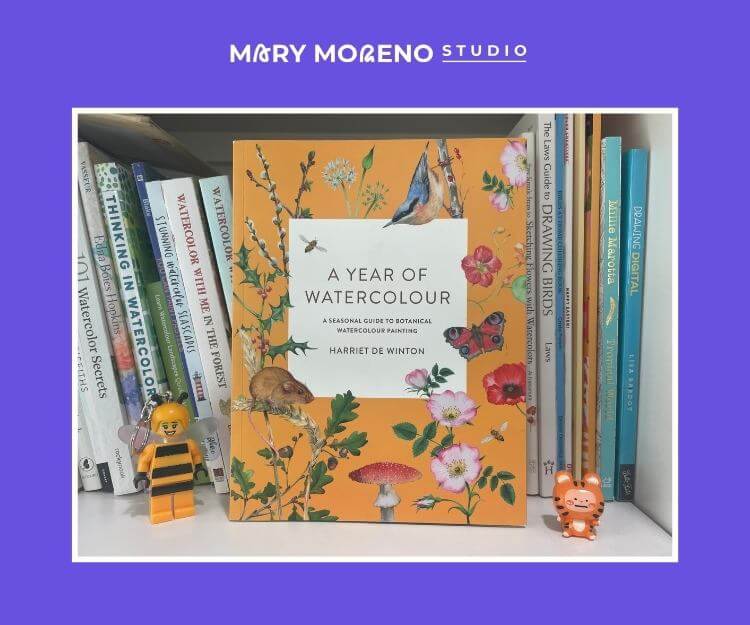
A Year of Watercolour by Harriet de Winton, photographed on my shelf
1. A Year of Watercolour — Harriet de Winton
This is a book I’ve returned to more than once, and it’s worth including here again because its seasonal structure pairs so naturally with a flower-focused practice. Harriet de Winton’s teaching style is calm, clear, and very beginner-friendly, with projects that feel elegant without being complicated.
What makes this book especially useful is how it’s organized around the seasons. You can open it at any point in the year and find inspiration that fits what you’re seeing around you — florals included. The individual projects are often simple and focused, which makes them ideal for shorter painting sessions.
It’s also a great option if you enjoy painting naturalistic botanicals like leafy florals, blooming vines, flowering vines, and stemmed flowers rather than complex compositions. That simplicity translates to real-life approachability and, again and again, I find myself painting another of Harriet's beautiful projects.
If you’re looking for a book that supports both seasonal inspiration and creative practice, this one continues to be a favorite for good reason.
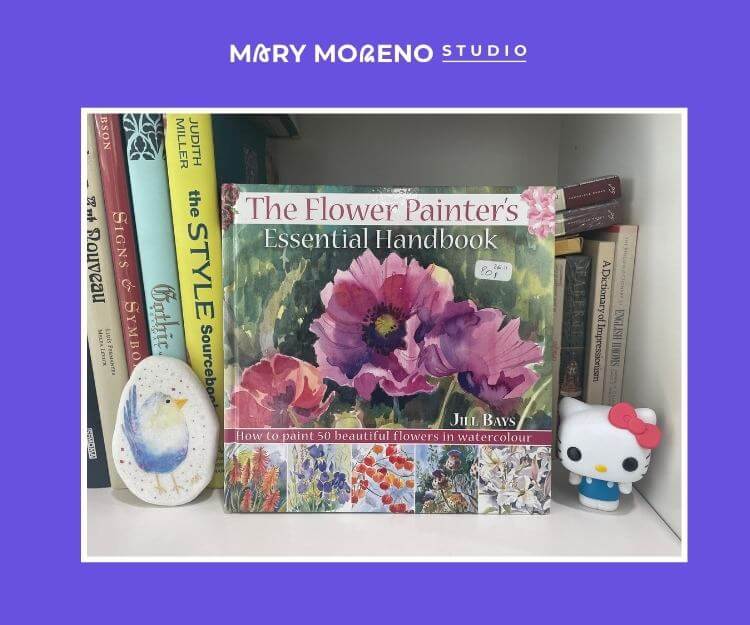
The Flower Painter's Essential Handbook by Jill Bays, photographed on my shelf
2. The Flower Painter’s Essential Handbook — Jill Bays
For beginners who want more focus on florals as a subject, this book offers a slightly more observational approach. Jill Bays walks through flower painting with an emphasis on shape, structure, and expressive brushwork, which helps you better understand what you’re painting — not just how to paint it.
One of the real strengths of this book is its attention to individual flowers and how they’re formed. That added clarity can make a noticeable difference when you’re trying to move beyond simple shapes and create more dimensional blooms.
At the same time, the instruction remains approachable. The projects are broken down in a way that still feels manageable for beginners, especially if you’re ready to spend a little more time observing and refining your work.
If you’re drawn to fuller floral compositions or want to better understand how flowers come together on the page, this is a helpful next step.
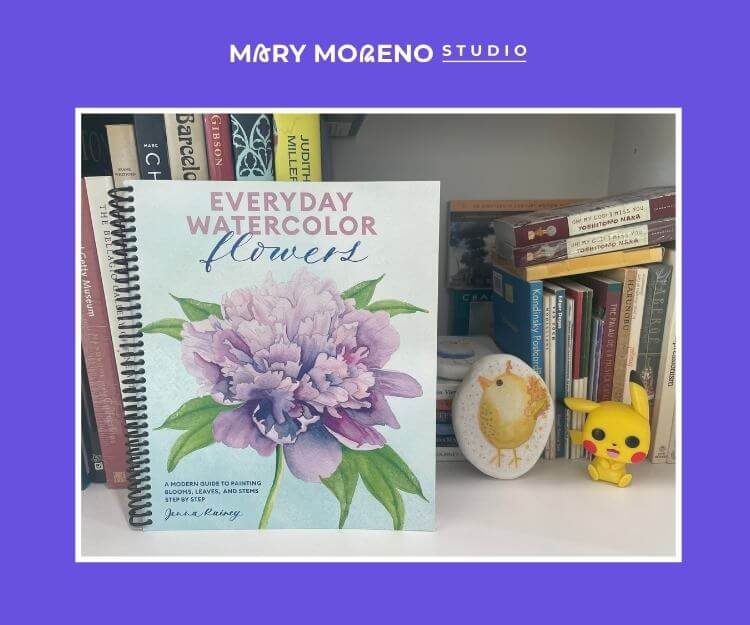
Everyday Watercolor Flowers by Jenna Rainey, photographed on my shelf
3. Everyday Watercolor Flowers — Jenna Rainey
If you enjoy a fresh, modern watercolor style, and flowers are a strong interest, this is a solid choice. Jenna Rainey is known for breaking techniques into navigable steps, and this flower-focused version builds on that strength with projects that feel structured and detailed. There are sketching exercises, tips on perspective and composition, and discussion of dimensions and proportions. A continuing theme is training your eye to see the basic shape of each flower group.
The projects are colorful and range in complexity, some in a loose, detailed style and others in a more realistic, intricate style. As Jenna explains, each subject and style requires a different set of skills, as well as patience. She promises, with practice, you'll gain the ability to look at any flower and break it down to its characteristic shape, and the skills to paint it.
What stands out is how clearly the projects translate into real painting practice — as you follow along, you’re building skills you can repeat in your own floral compositions.
If your goal is to build confidence with flowers in a focused way over time, check out Jenna's book.
Quick Quiz: Which Fits You?
Before you choose, think about your current painting style:
Do you enjoy quick, simple studies—or do you prefer slower, more detailed projects?
- If you prefer nature-based flowers and seasonal practice → Book 1
- If you want to paint fuller, more expressive floral compositions → Book 2
- If you love Jenna Rainey’s modern style and seek deeper instruction → Book 3
👉 Suggestion: Once you pick one of these books, try a floral project in your next painting session — even working through just the first project step helps you learn and build watercolor confidence.
💛 Still Loving These Recommended Books
Here are a couple of books I’ve recommended before and still return to — they complement the flower-focused picks above and expand your options as you continue learning:
- The Joy of Watercolor by Emma Block → explore more in my earlier book guide
- Your Brain on Art: How the Arts Transform Us by Susan Magsamen and Ivy Ross → a science-backed wide-ranging exploration of how the arts are essential to our lives and communities — did you know painting time doubles as restorative self-care?!
- The Watercolor Dictionary → a clear, beginner-friendly reference for understanding watercolor terms and techniques, available on Amazon
📖 Before You Buy a Book
Before you buy, check your local library — you may be able to borrow one or more of these titles first. It’s a practical way to explore different teaching styles and find which resonates best with you.
👉 Suggestion: And if one of these becomes a favorite, it’s always worth having a copy nearby as creative inspiration for your watercolor flower painting sessions.
💬 Closing Thoughts for Today
You definitely do not need a large collection of watercolor books to make meaningful progress. If you happen to find one that aligns with how you want to paint right now, that is more than enough.
What matters more is how you use it — returning to it, practicing from it, and letting it support your time at the table.
As a self-taught artist, I’ve found in my own practice that steady, simple practice makes the biggest difference over time when it comes to building skill and confidence.
Whether you’re painting a single bloom or experimenting with a full floral page, these books are there to guide and inspire, one session at a time. Choose one that feels like a good fit, and let it become part of your regular practice.
🔗 Recommended for You
Author